
A domestic project / In detail
Abbie de Bunsen — Bespoke furniture
Sculpted curves, generous seating and details with personality. A domestic bespoke furniture project with Abbie de Bunsen as lead designer, bringing together distinctive pieces for thoughtfully composed interiors.
Explore the details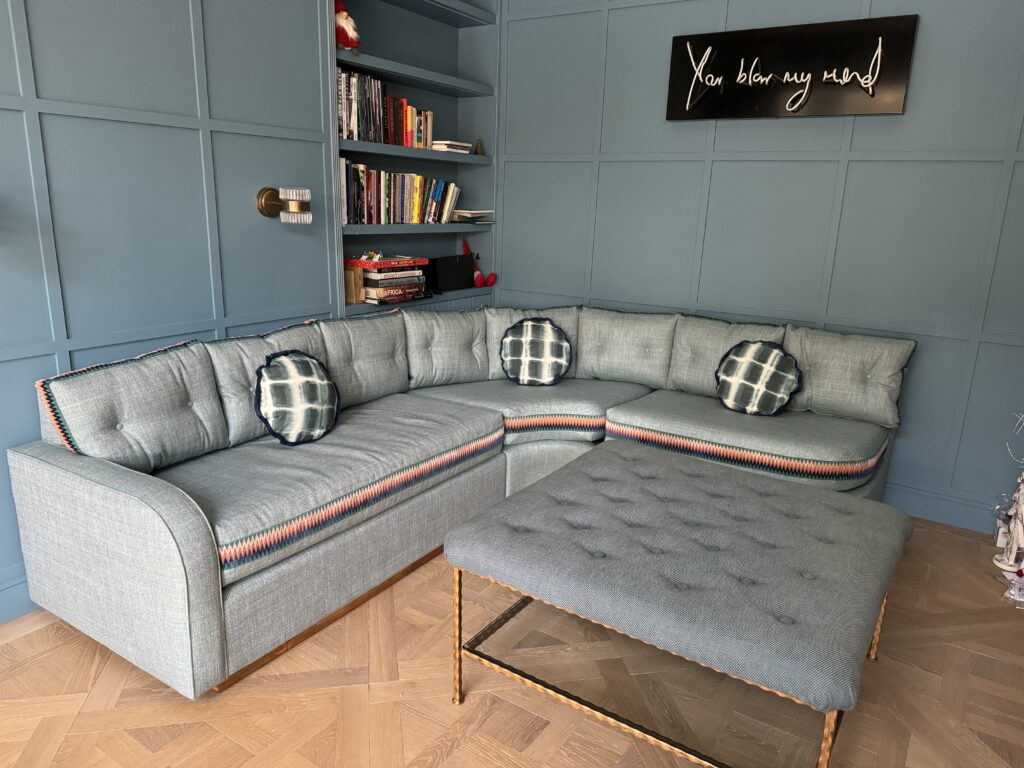
- The work
- Bespoke furniture
- The project
- Sofas, corner seating and footstools
- Project type
- Domestic project
01 / A sense of place
Made for a home.
Full of character.
A home can hold several different moods. A curved sofa makes a sculptural focal point; a long straight sofa offers a quieter outline; a corner arrangement brings the seating around the room.
This domestic project brings those possibilities together through bespoke furniture, with Abbie de Bunsen as lead designer. The photographs show a range of seating forms, from a compact rust-coloured sofa to a larger wraparound arrangement, each with its own character.
The story is in the relationship between the pieces and their settings: warm upholstery against deep green walls, blue-grey seating within blue panelling, and rich rust tones beneath a boldly striped ceiling.
Colour / Pattern / Detail
Different finishes.
A shared character.
Rust and rose tones, blue-grey upholstery, patterned borders and buttoned details.
Shape as a starting point
Sweeping backs, curved seat fronts and rounded ends give each arrangement a recognisable outline. The photographs show how those curves work at both compact and room-filling scales.
Colour in context
Warm rust and rose shades contrast with green or neutral walls. In the blue-panelled setting, the cooler upholstery sits closer to the room colour, with patterned edging adding a sharper accent.
Details that connect
Buttons, cushion borders and repeated upholstery tones connect sofas and footstools. Plain surfaces give these smaller details room to stand out.
Project collaboration
Lead designerAbbie de Bunsen
Abbie de Bunsen creates atmospheric interiors with an individual approach to colour, proportion and the way furniture sits within a space. Her practice works across residential and commercial projects.
For this domestic project, Abbie de Bunsen is credited as lead designer. The furniture shown here forms part of that wider interior design: individual silhouettes, contrasting palettes and carefully chosen finishing details.
02 / A closer look
The small details.
The whole picture.
A guided look at the finished project: the setting, the upholstery and the details that bring it together.
Detail 01
Give the sofa its own silhouette.
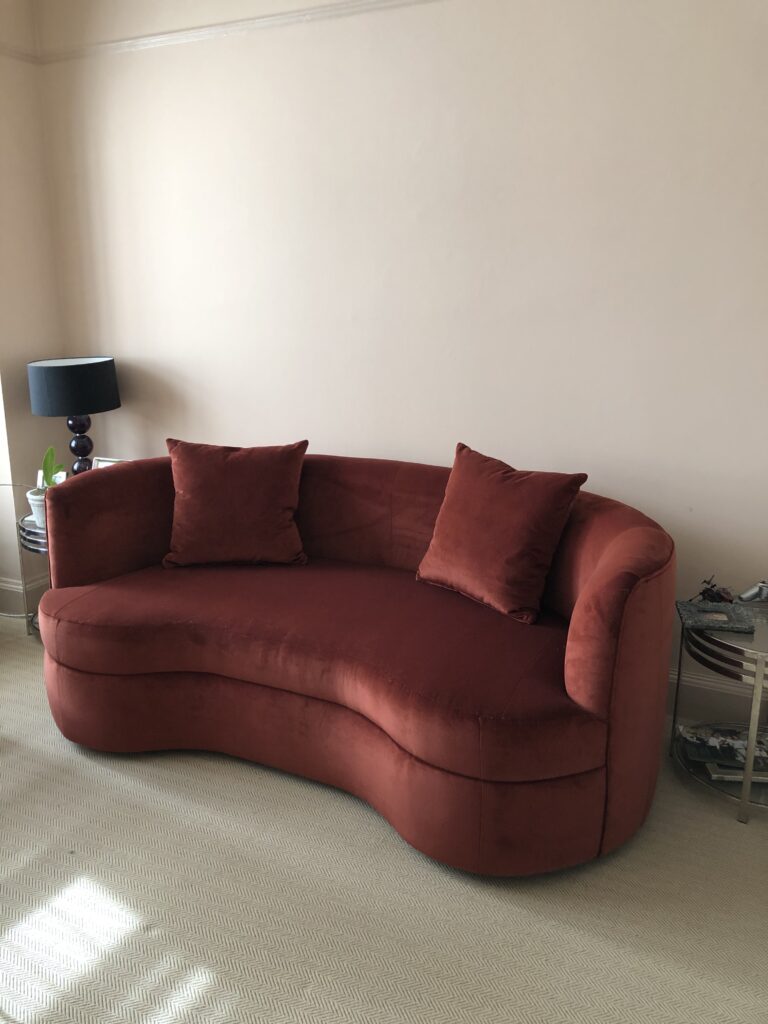
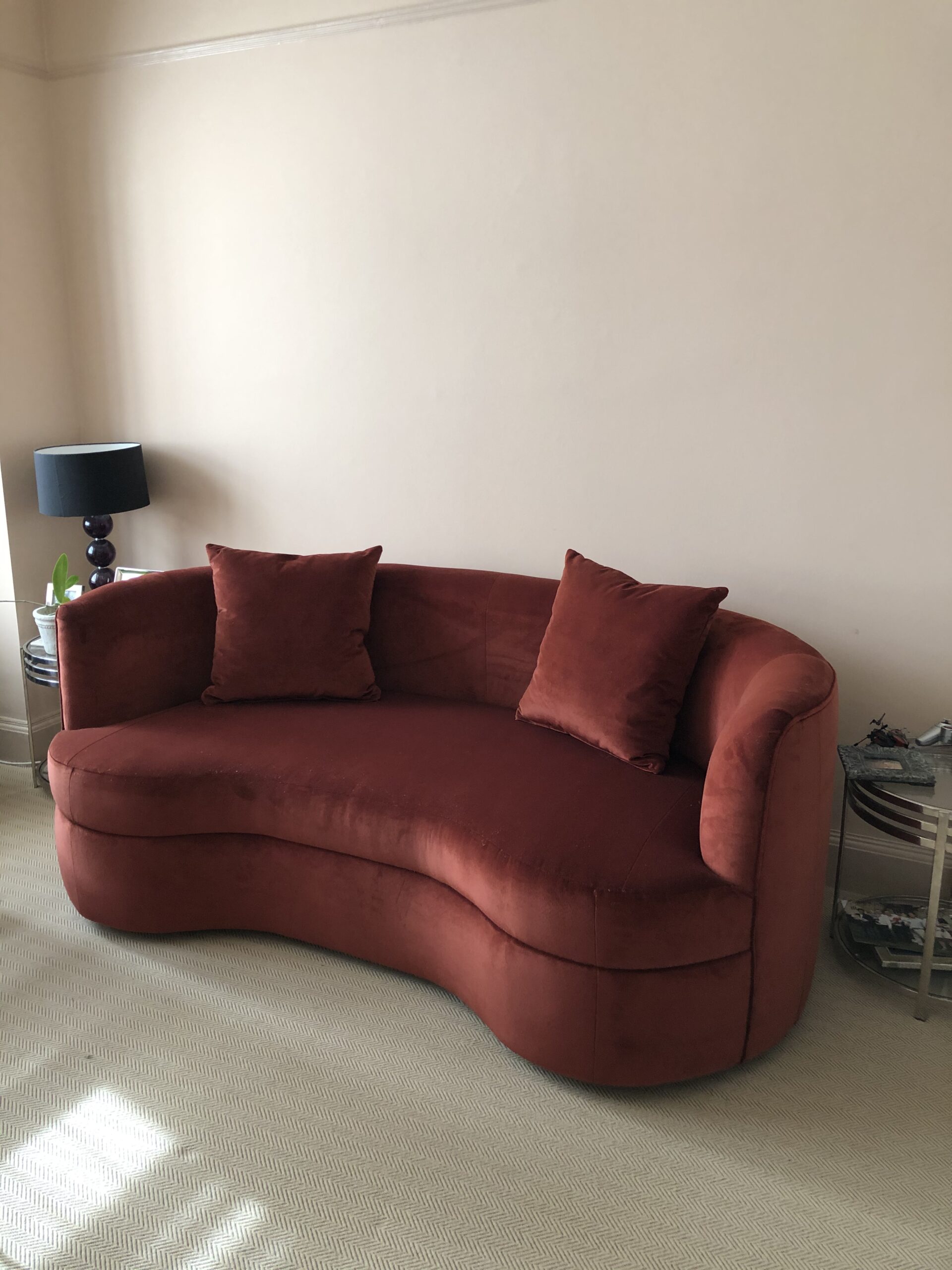
The rust-coloured sofa has a continuous curved back, softly rounded arms and a shaped front. The outline draws inward at the centre before opening out towards each end, giving the piece a sculptural quality.
Two matching scatter cushions sit against the back without disguising its shape. With a plain wall behind it, the form of the sofa remains the focus. The rich upholstery catches the light differently across the front, arms and back, emphasising the changes in direction.
Why it mattersA distinctive outline can give a room its focal point without relying on a busy fabric pattern.
Detail 02
Connect the sofa and footstool.
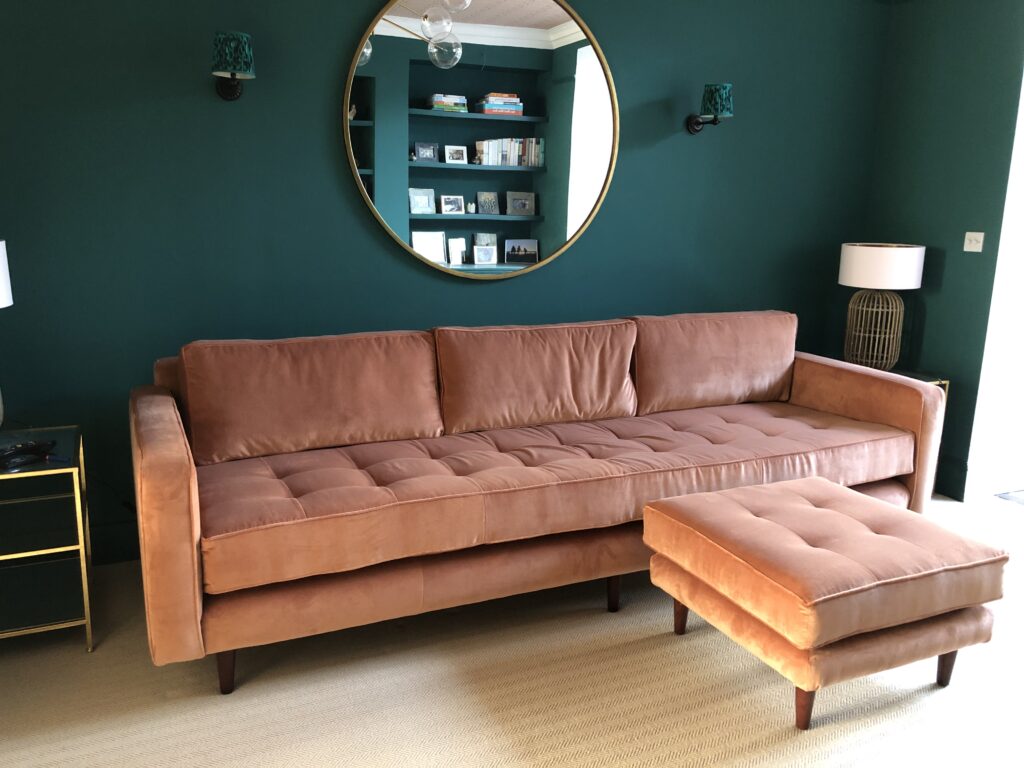
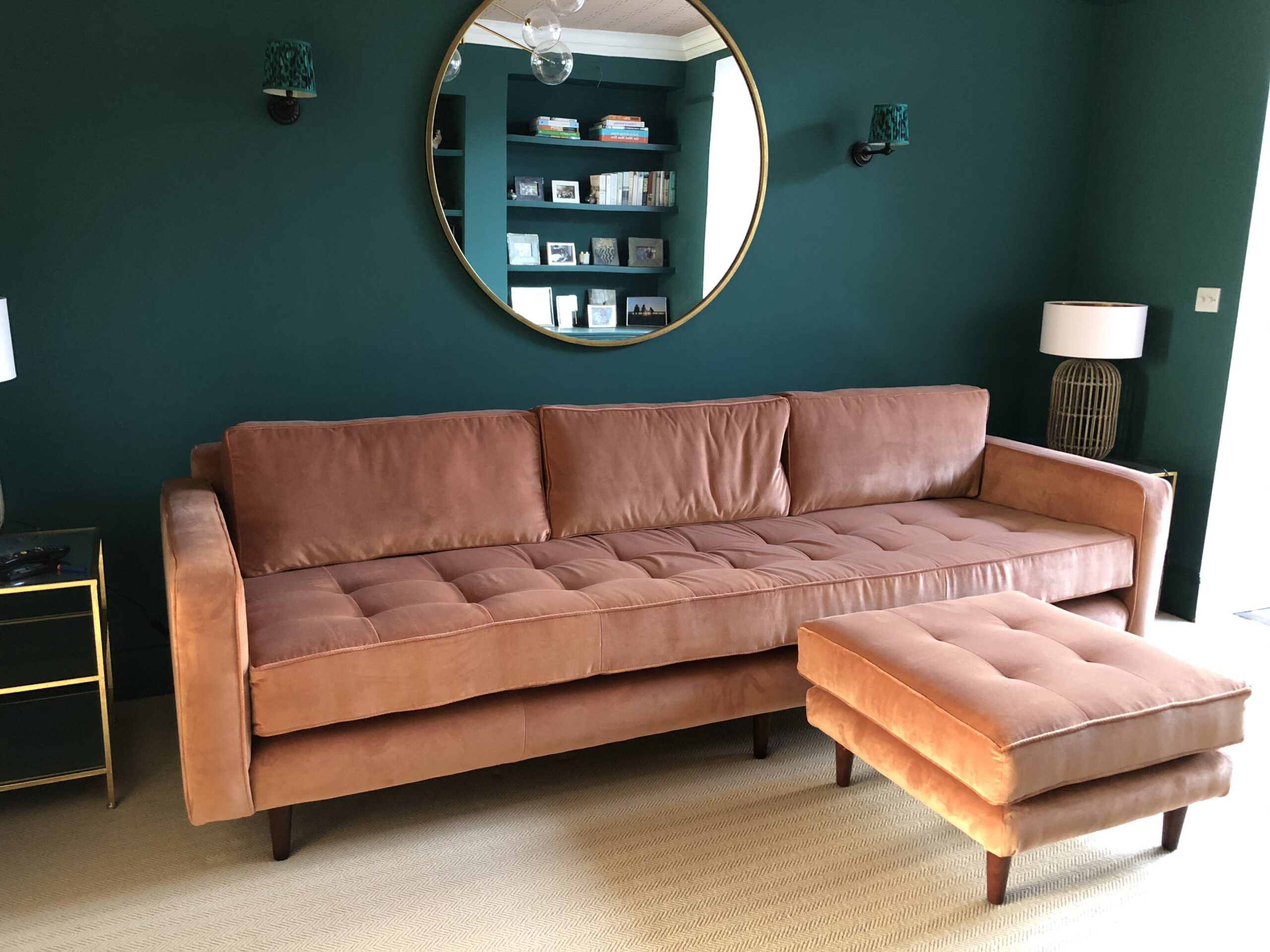
Against the dark green wall, the rose-coloured sofa takes a more linear form. Slender upholstered arms frame a long buttoned seat, with three loose back cushions above. Visible dark legs lift the lower edge clear of the floor.
The footstool repeats the upholstery colour and buttoned surface on a smaller scale. Its proportions and separate position give it its own identity, while the shared details make the two pieces read together.
The result is a clear relationship between the main seat and its companion piece, with the room colour providing the contrast.
Why it mattersRepeating a colour or upholstery detail can connect different pieces while allowing their shapes and sizes to vary.
Detail 03
Follow the corner, soften the line.
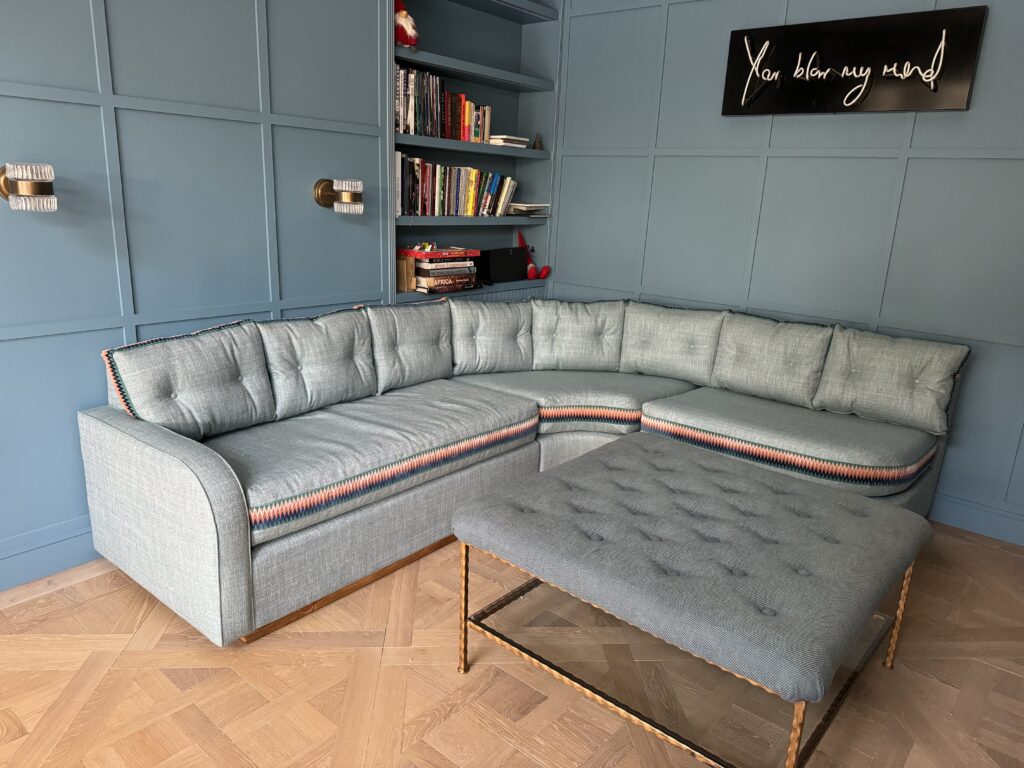
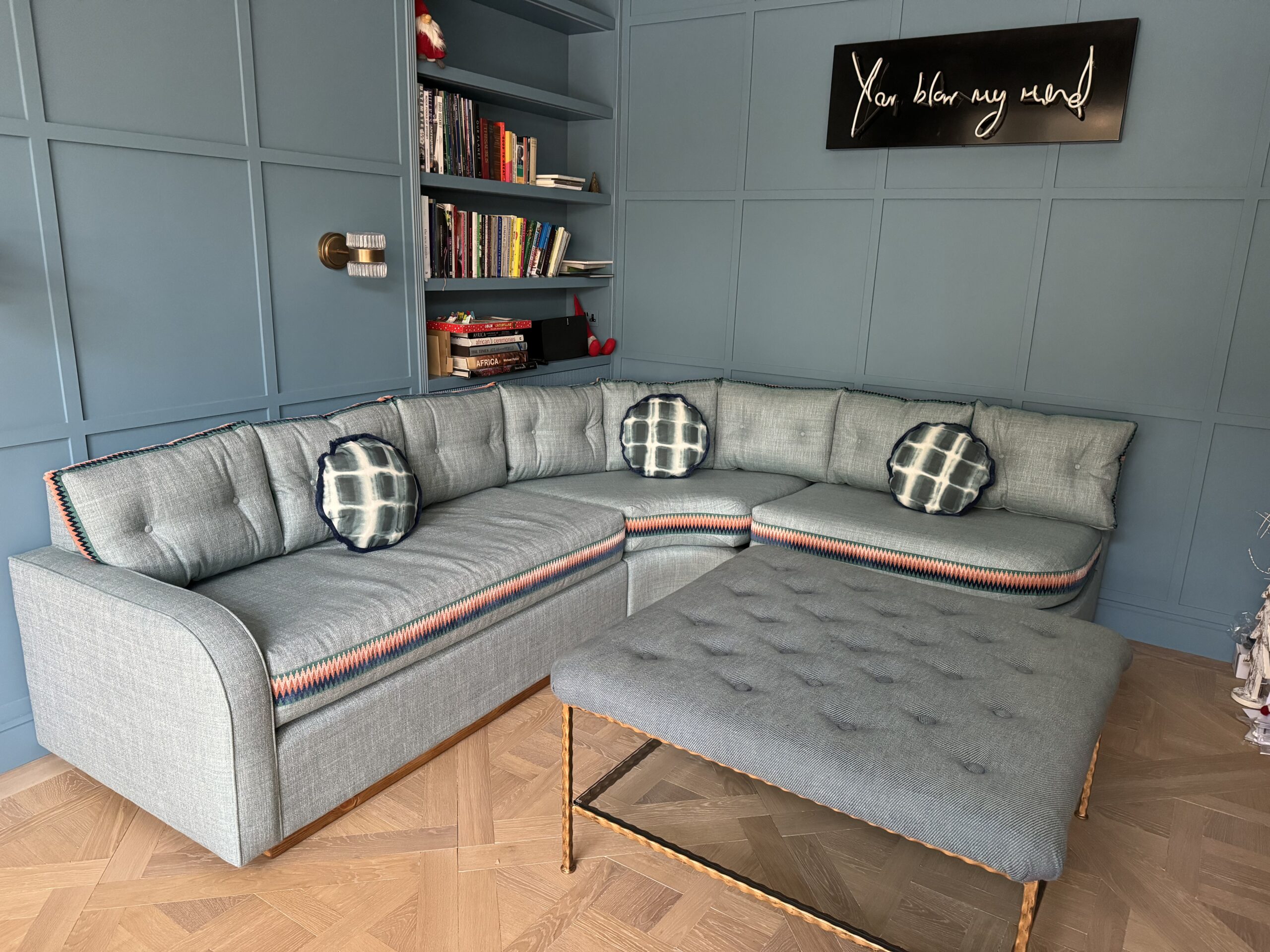
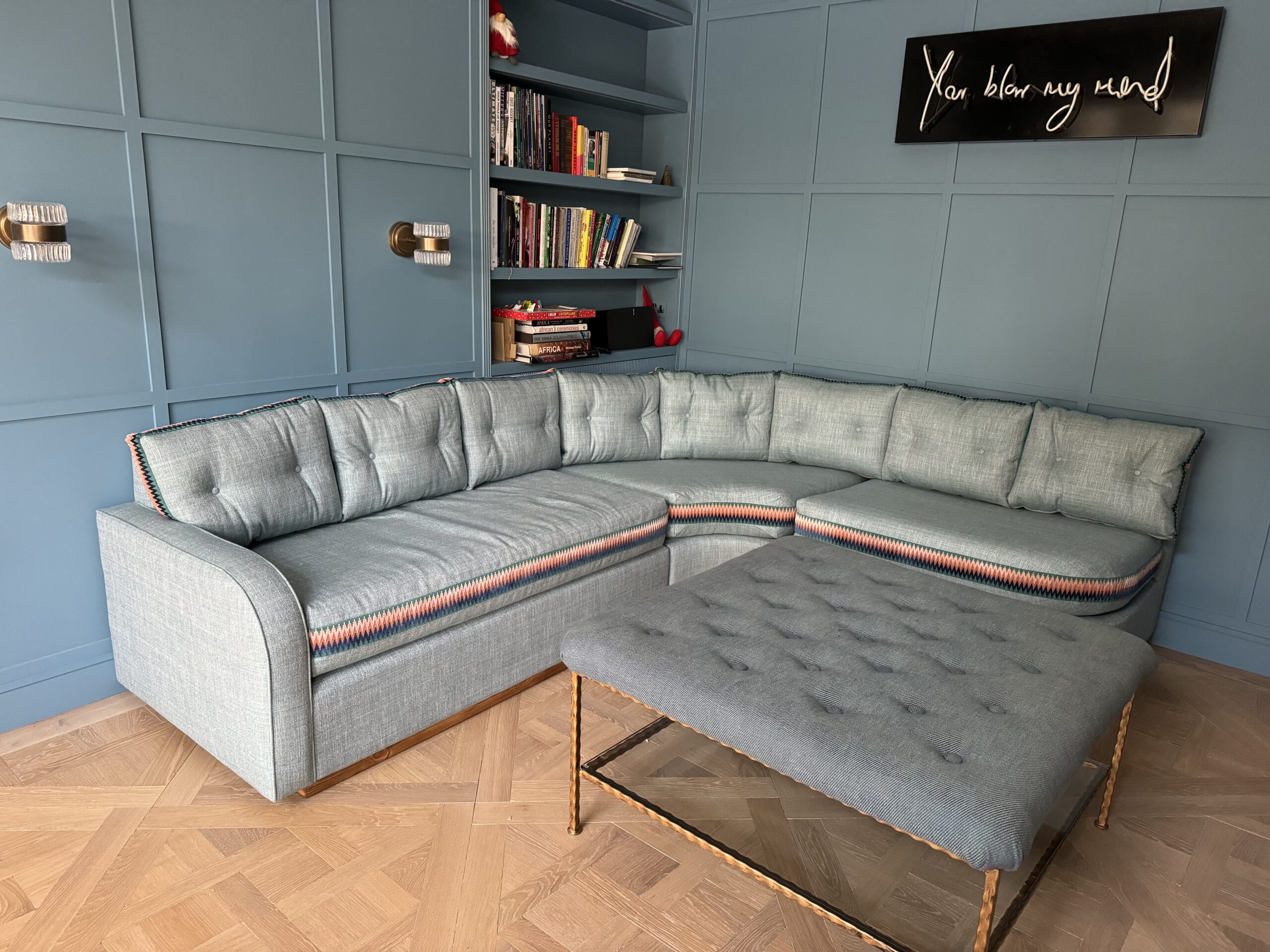
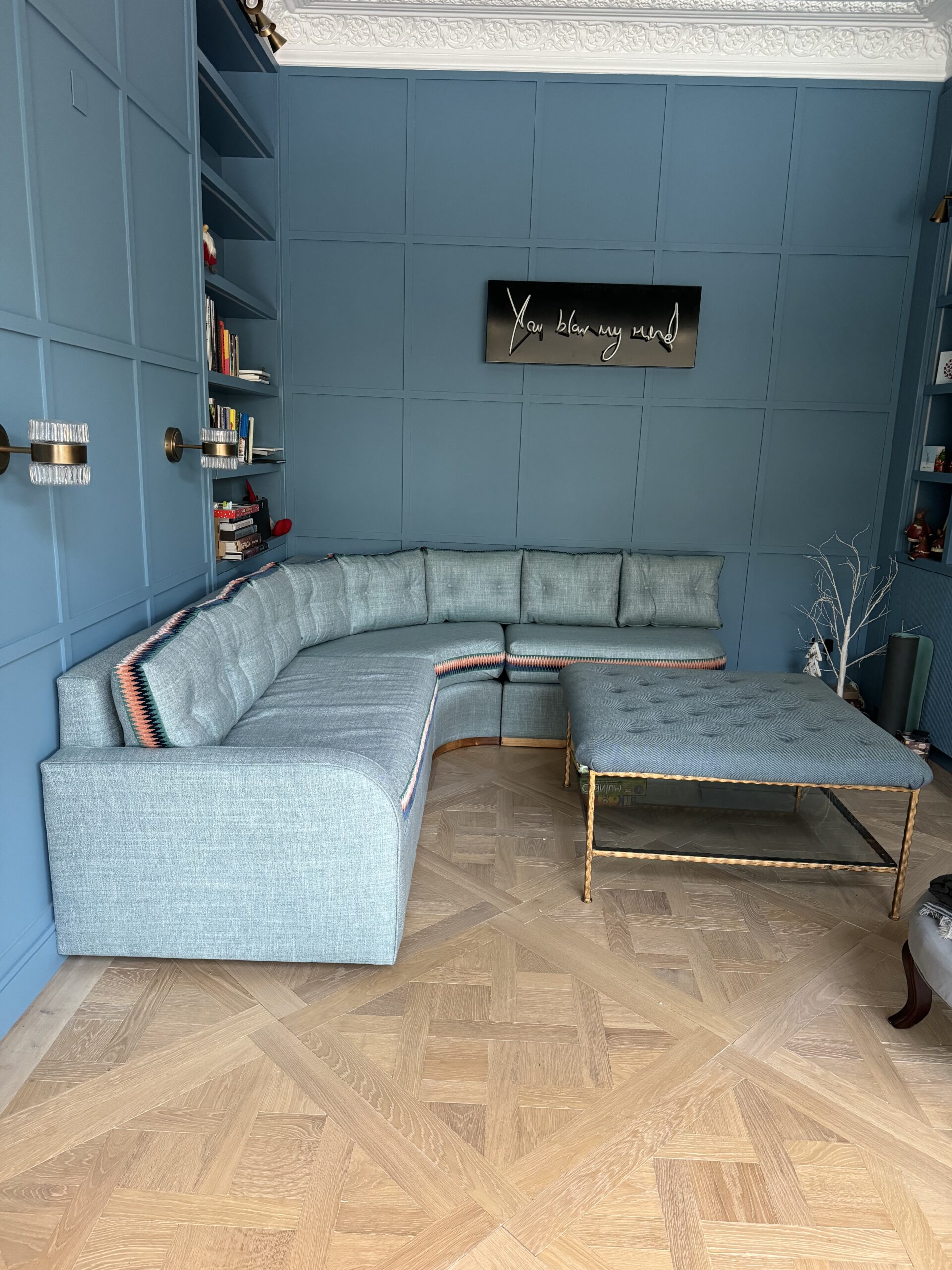
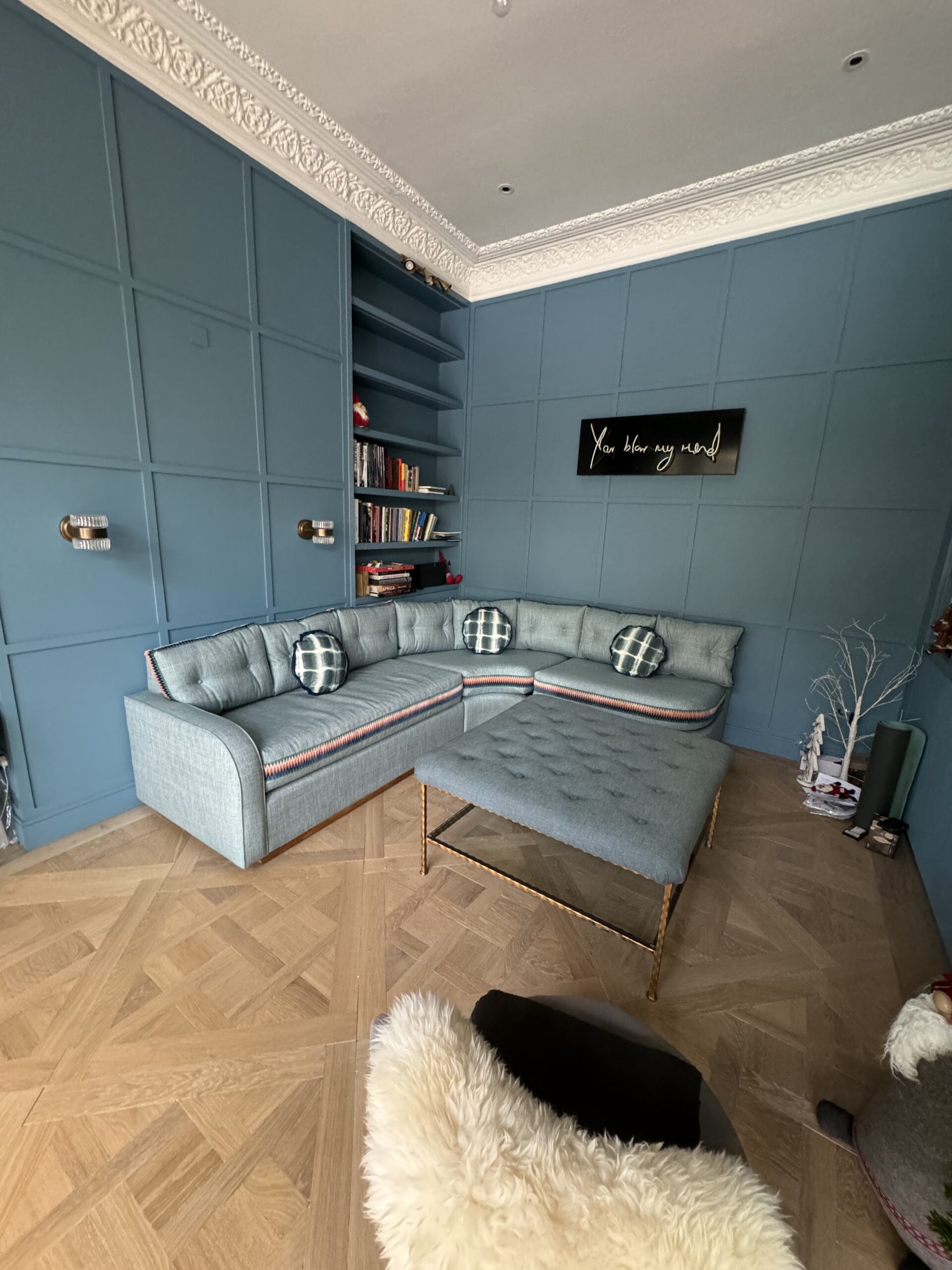
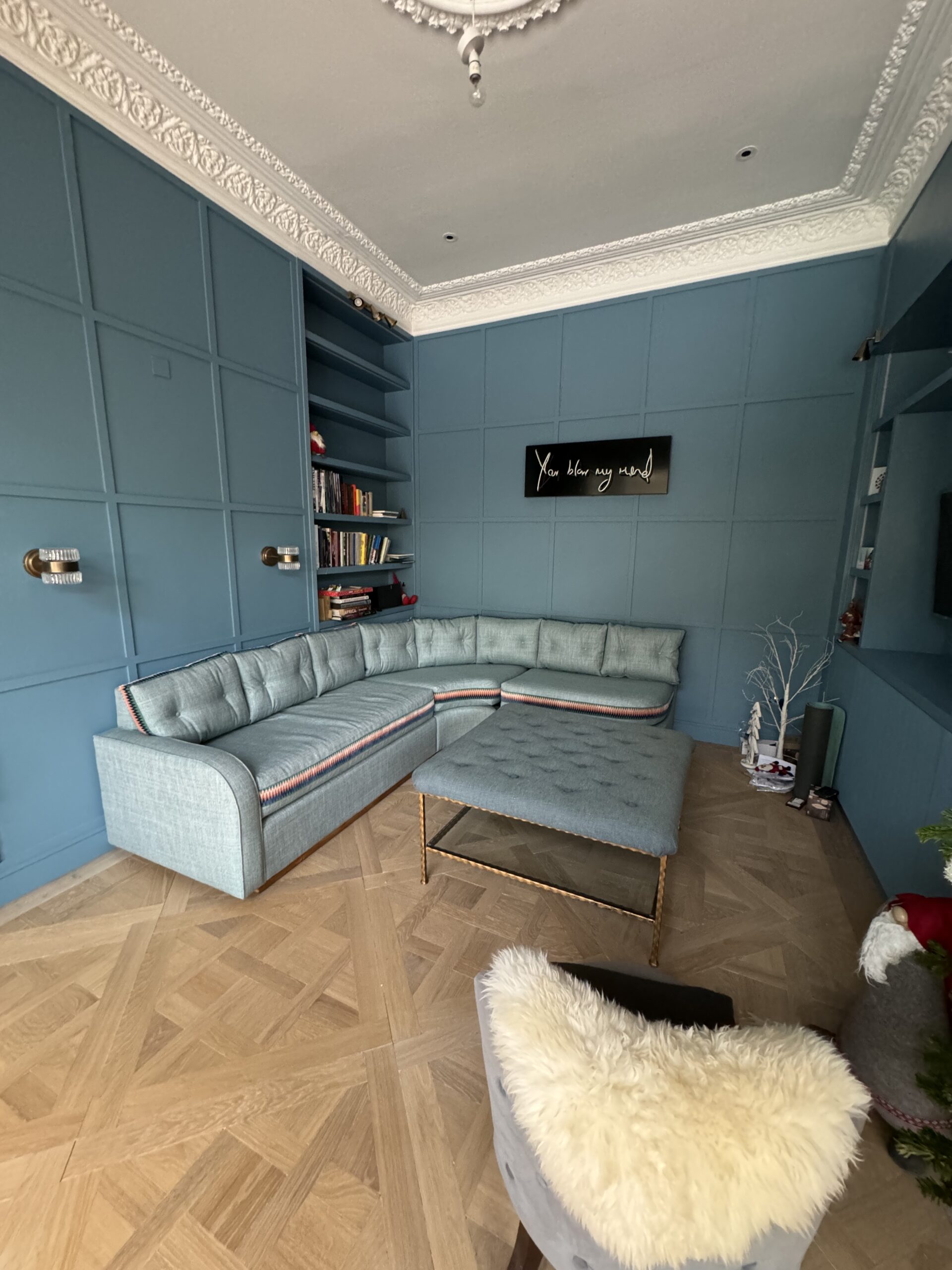
In the blue-panelled room, the seating follows two walls before finishing with a rounded end. Blue-grey upholstery creates a close relationship with the surrounding colour, while peach and darker zigzag borders trace the cushion edges.
Small buttons punctuate the back cushions. The patterned boxing adds a second rhythm along the seat fronts, continuing around the corner and towards the curved end.
A buttoned rectangular footstool sits in front on a slender metal frame. Its open base contrasts with the more substantial upholstered sofa, keeping the two silhouettes distinct.
Why it mattersA border makes the path of a cushion edge visible, turning a practical seam into part of the design.
Detail 04
Bring the seating around the room.
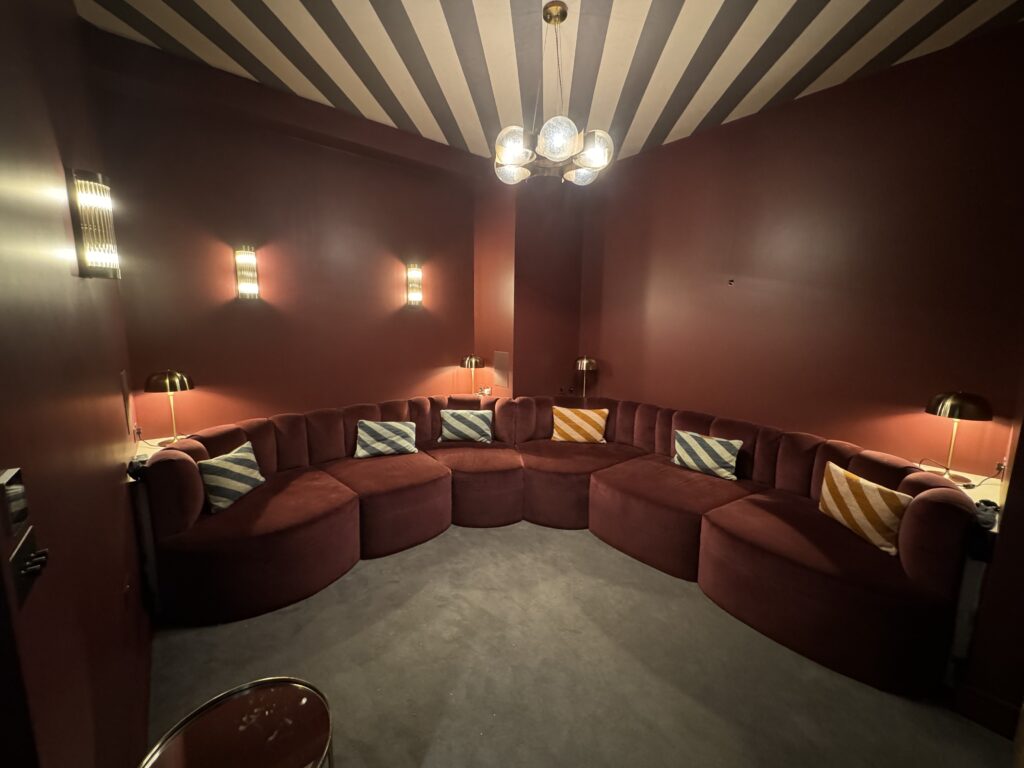
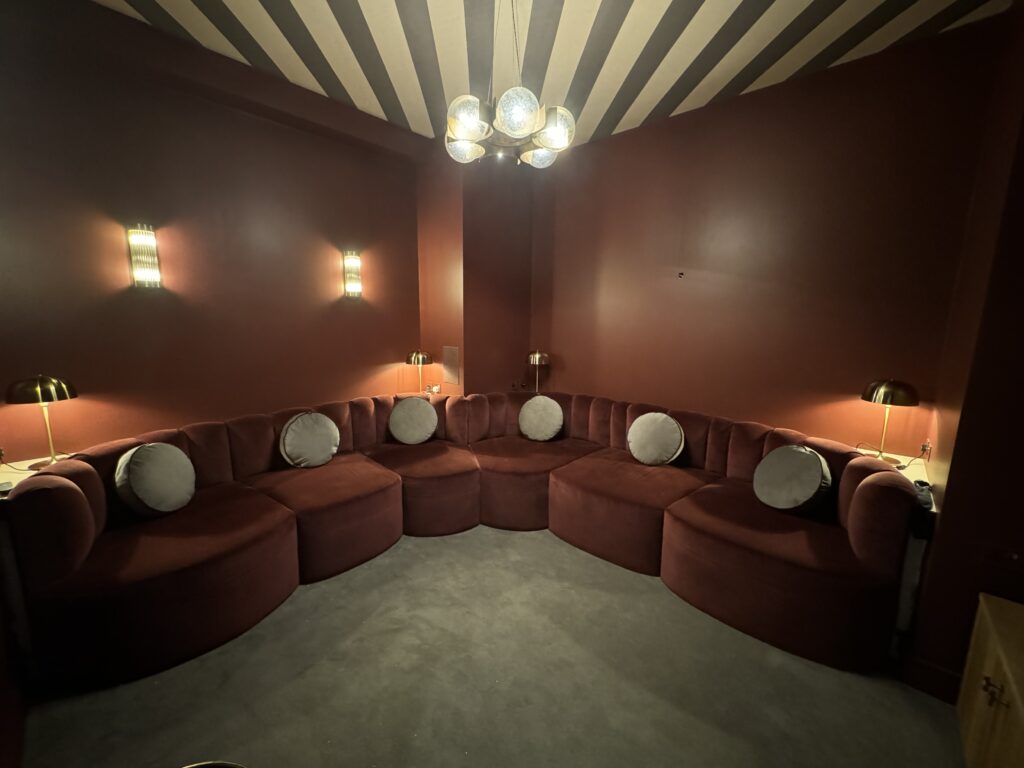
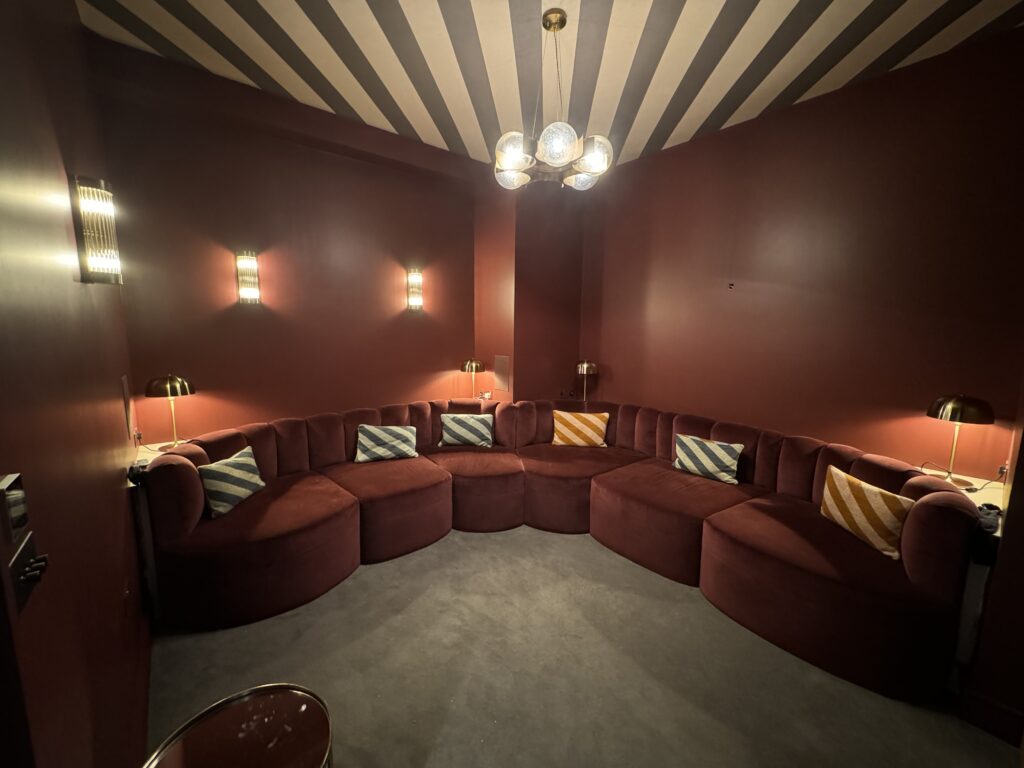
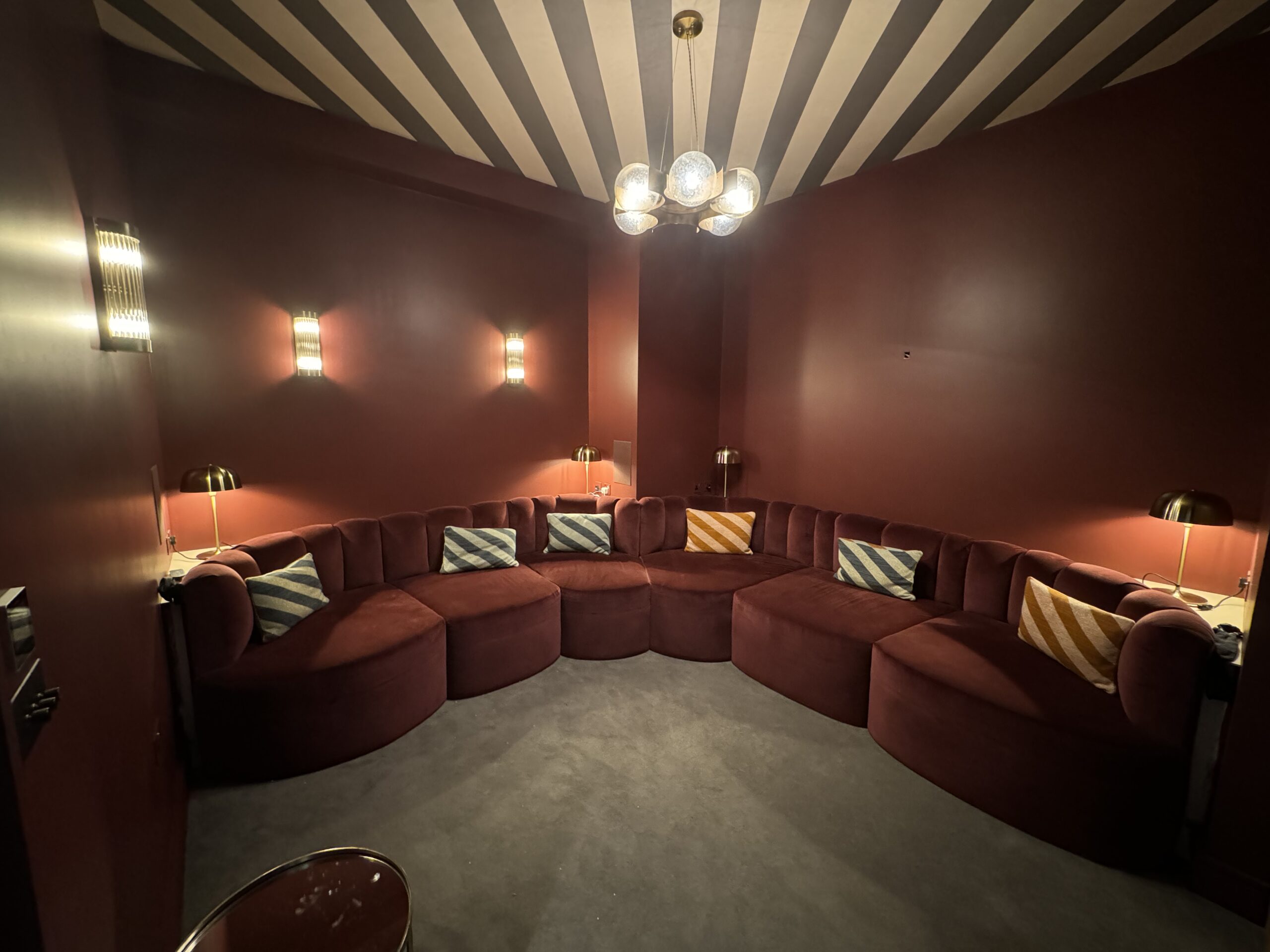
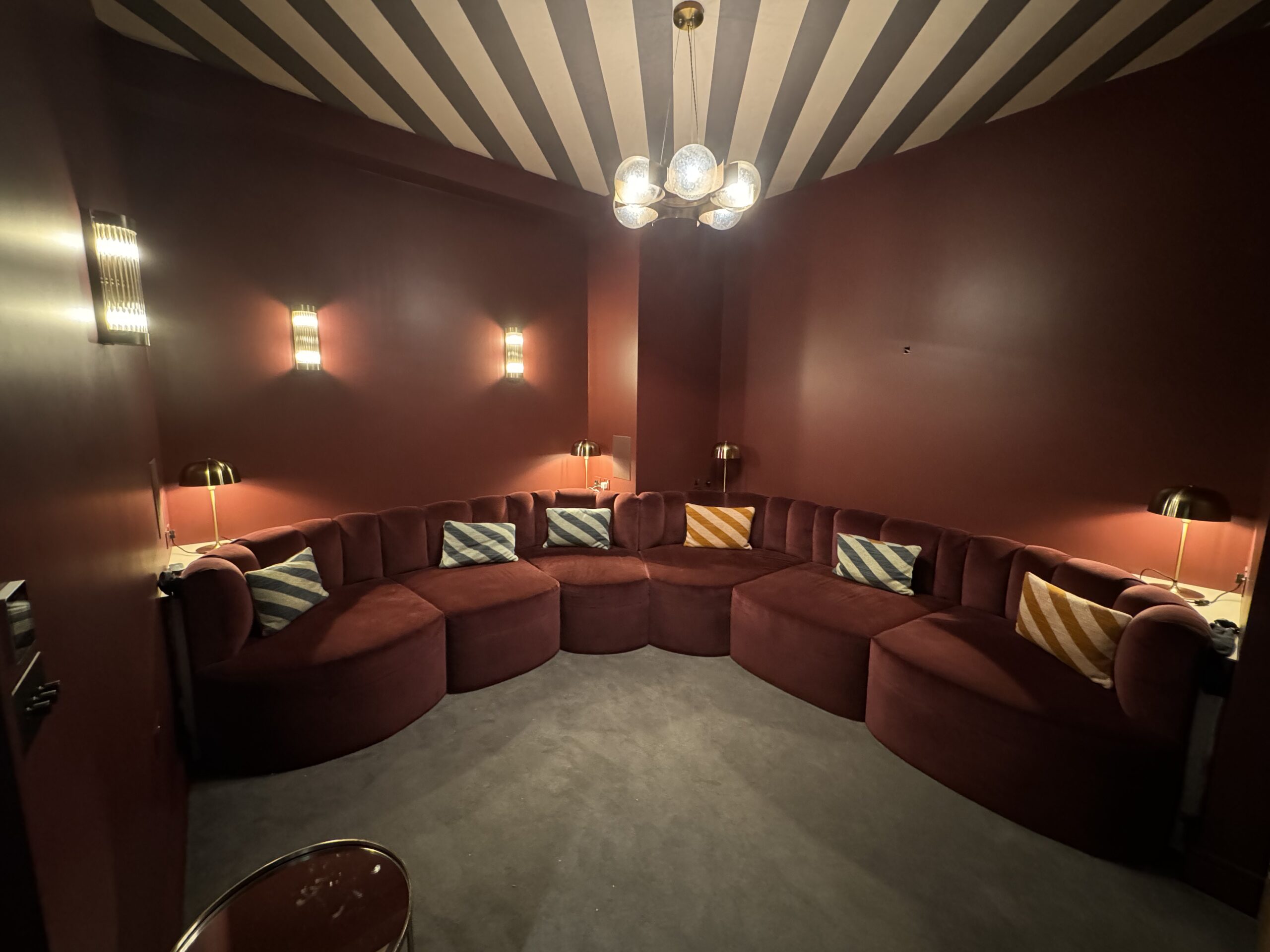
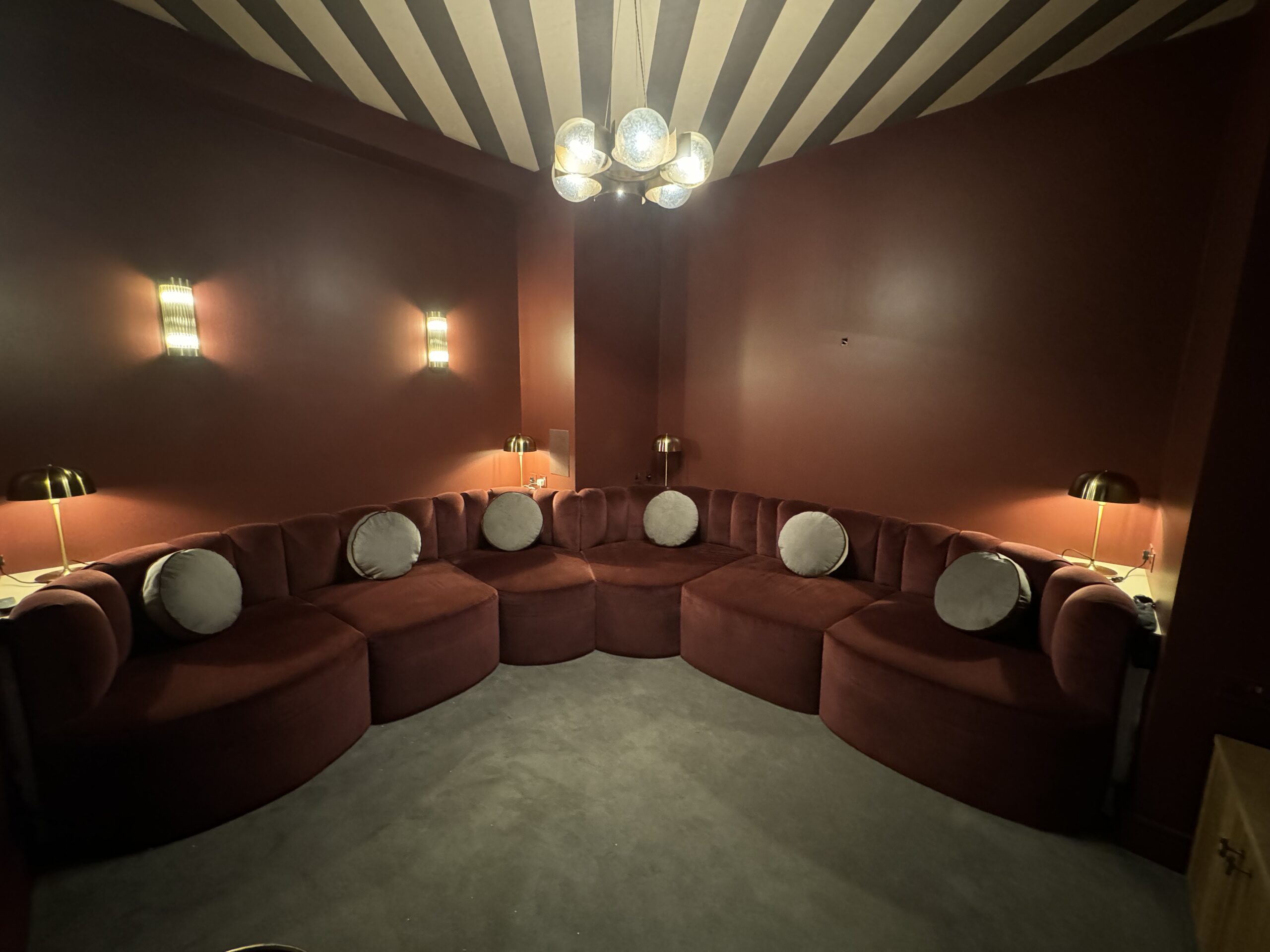
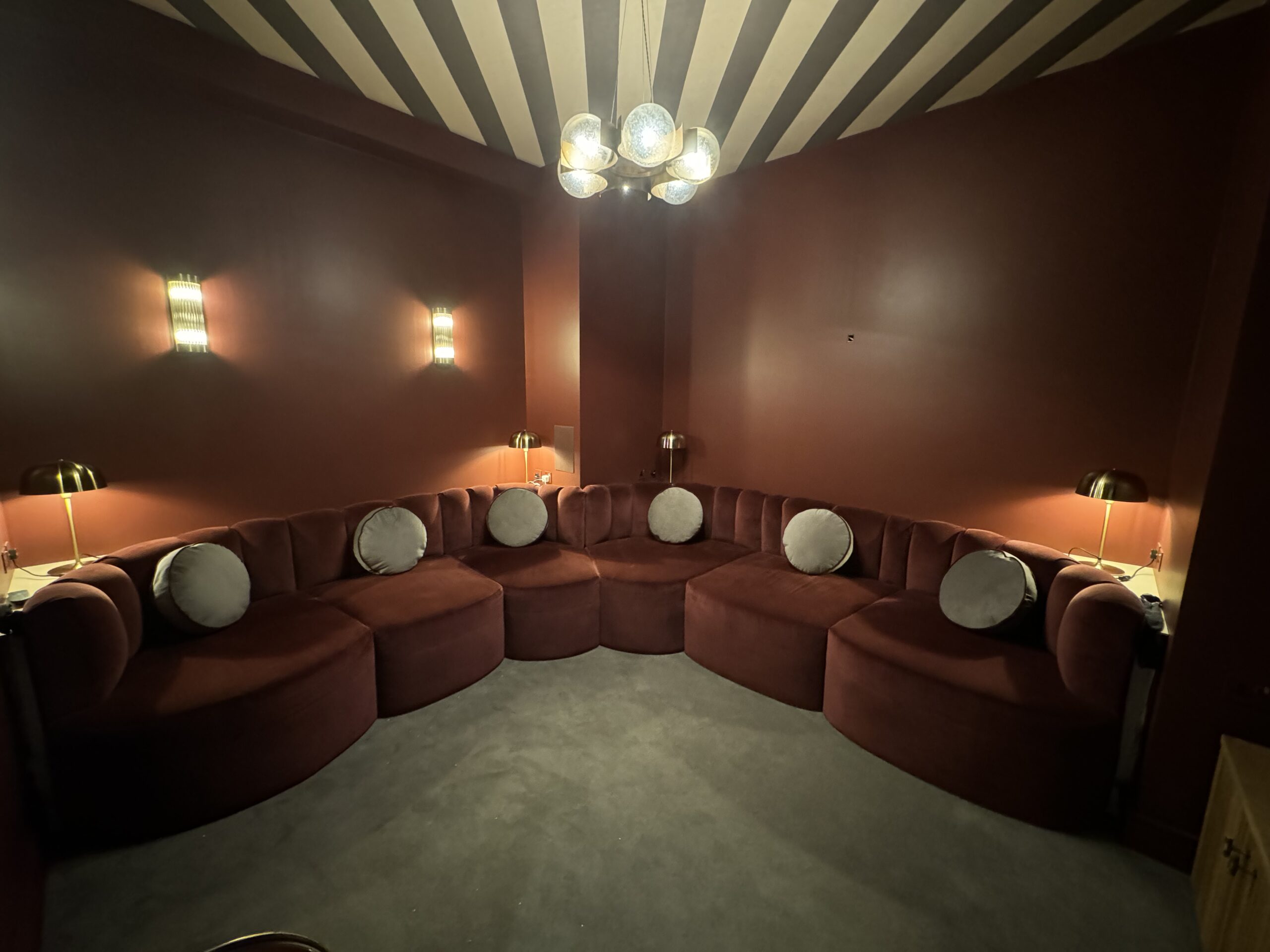
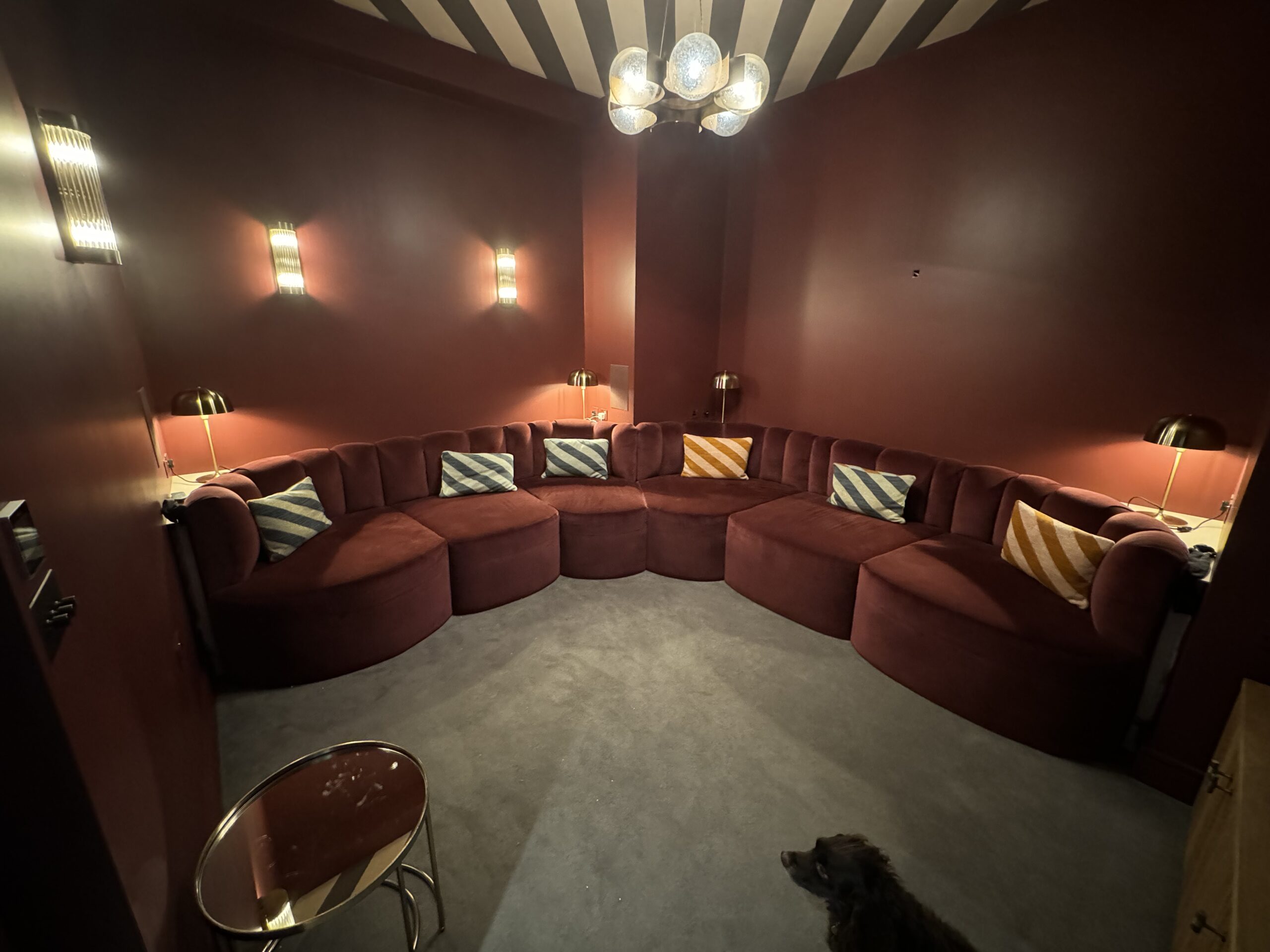
The rust-coloured wraparound arrangement uses repeated rounded seat fronts and segmented back sections to form a broad, enclosing curve. The seating follows the edges of the room, with an open area left at the centre.
Here, the upholstery sits close to the wall colour. That continuity makes the shape of the arrangement especially noticeable, while the striped ceiling and scatter cushions introduce a contrasting pattern.
The photographs show how a bespoke arrangement can become a major part of the room’s composition, with its outline visible from the entrance as well as from individual seats.
Why it mattersAt a larger scale, a repeated curve gives an extended arrangement continuity from one end to the other.
Detail 05
Consider the final layer.
The wraparound seating is photographed with two different cushion treatments. Striped rectangular cushions introduce diagonal lines and contrasts of blue, ochre and cream. Pale round cushions give a softer accent and echo the curved seat fronts.
Both views keep the main upholstery in focus, but the small shapes change the overall impression. The same principle appears in the blue-grey corner setting, where round patterned cushions add another layer above the bordered seat cushions.
These finishing details show how the furniture can sit within a carefully composed interior while still leaving room for individual character.
Why it mattersScatter cushions can repeat a shape, introduce a contrast or connect colours already present in a room.
03 / The finished project
Every detail.
In its place.
A collection of distinctive bespoke pieces for domestic interiors: curved sofas, generous corner seating, a wraparound arrangement and upholstered footstools. Each setting has its own palette, with shared attention to shape, proportion and detail.
Lead designer: Abbie de Bunsen. Explore all twelve photographs below to see the individual pieces and the wider room settings.
The project in photographs.
Select a photograph to take a closer look.
A home that feels like you
Furniture with
your character.
Have a piece or a room in mind? Tell us what you would love to create or change.